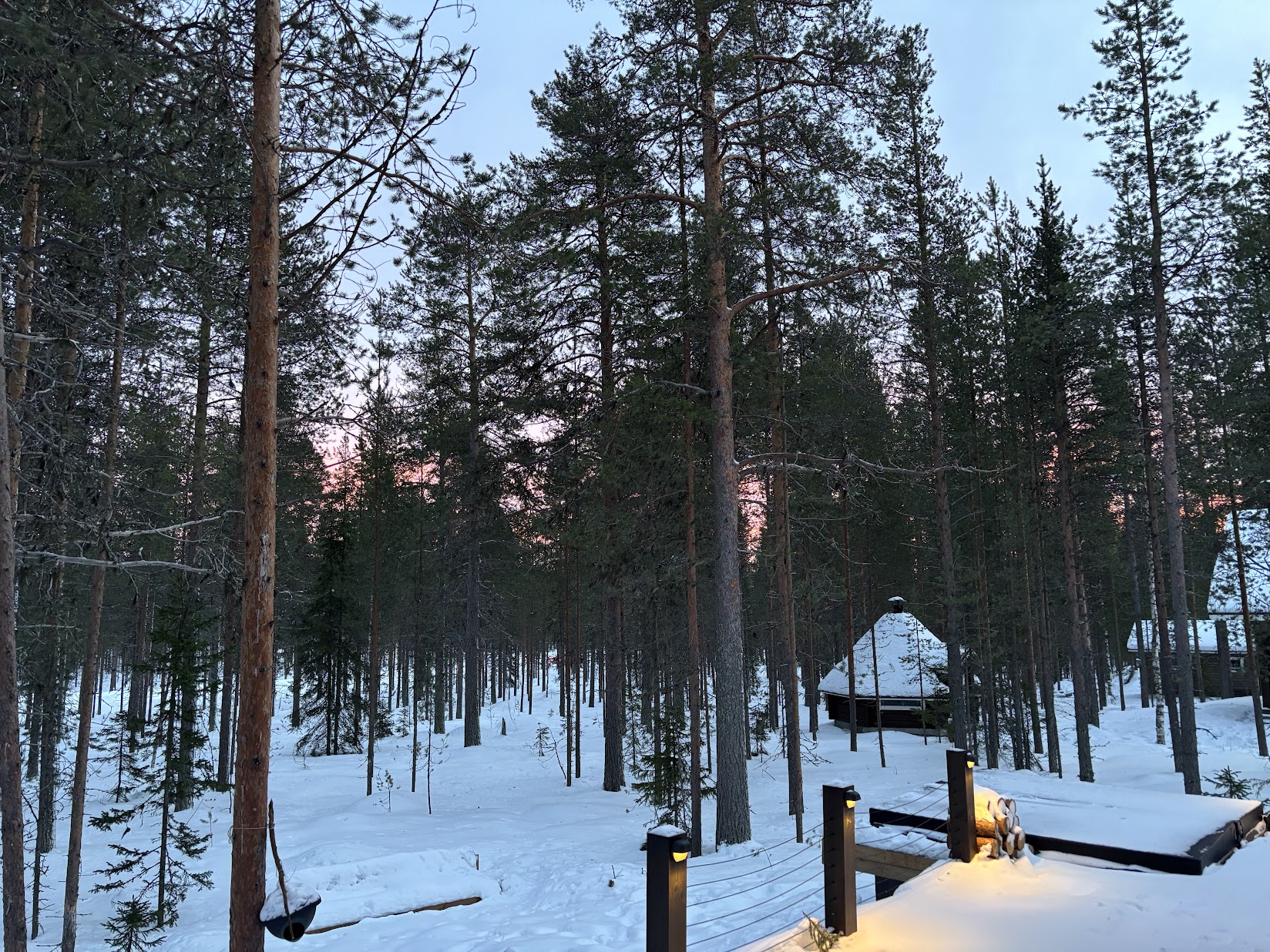
Things to Do in Levi, Lapland
A local guide to Levi, Finnish Lapland — written by Colin and Livia, who live here year-round. Northern Lights, winter activities, summer, and everything you need to plan your stay.
Levi, from people who live here.
Levi is the largest ski resort in Finland, and the activity that surrounds it — huskies, reindeer, snowmobiles, the aurora — is genuinely on the cabin's doorstep. What follows is what we would actually tell a friend who was coming to stay.
The three things people ask about
Seeing the Northern Lights
When to come, where to look, and an honest account of your chances — written from a cabin that sits under a dark, open sky.
Read the guide →Getting here and getting about
Sixteen kilometres from Kittilä Airport, with a ski bus stop at the end of the garden. Flights, transfers, driving and parking.
Read the guide →The cabin itself
Three bedrooms, a private Finnish sauna and a Drop Spa hot tub, in private forest — your base for all of the above.
Read the guide →Skiing in Levi
Levi is the largest ski resort in Finland and the country's main alpine destination — it has hosted World Cup slalom races, which tells you the pistes are taken seriously. For most visitors the appeal is different, though: it is an unusually forgiving place to ski. The runs are wide, well groomed and mostly gentle, the lift queues are short by Alpine standards, and there are dedicated beginner areas that make it a genuinely good place to learn or to bring children who are still finding their feet. What catches people out is the light rather than the terrain. In December and early January the sun barely clears the horizon, so you are skiing through a long blue twilight — floodlit runs extend the day, and it is a strange and rather beautiful way to ski. By March you have proper daylight, better snow and far more of it. Ski hire, ski schools and equipment shops are all in the resort, a few minutes from the cabin. We have deliberately not listed opening hours or prices here, because they change season to season and a wrong one is worse than none — ask us before you travel and we will tell you what is actually open the week you arrive.
Getting to the slopes from the cabin
The ski bus stops at the end of the garden. The R1 service calls at Stop 12: Ounasranta every 30 minutes between 09:00 and 19:00, with connections to the rest of the resort via the R2 service at Zero Point (South Point). If you have skied with children and a car boot full of equipment, you will understand why a bus stop at the end of your own garden is worth more than it sounds. The ski area is also about a ten-minute walk from the cabin. To be precise about what we are not claiming: the cabin is not ski-in, ski-out. You cannot ski to or from the door. It is close to the skiing, which is a different and more honest thing to say.
The Northern Lights
Levi sits at roughly 68° north and the aurora season runs from late September to March. The cabin helps: it stands away from the resort's lights, with an open forest sky you can watch from the living room or the hot tub. Nobody can honestly promise the lights — they depend on solar activity and cloud cover — so be wary of anyone who does. Our full Northern Lights guide (linked at the top of this page) covers the best months and how to improve your odds.
Husky and reindeer experiences
Husky sledding is the activity most guests book and the one most of them talk about afterwards. You are usually given a team and a sled and taught to drive it yourself, which is more involving — and considerably colder — than being a passenger. Reindeer sledding is the slower, quieter counterpart: less adrenaline, more atmosphere, and generally the better option with small children. Both run from farms and operators in and around Levi and Kittilä, and both should be booked in advance in the peak weeks. We have not named operators or quoted prices here, because we would rather recommend whoever is actually good in the season you visit than have a stale list on a web page. Ask us.
Snowmobiling, snowshoeing and cross-country
Snowmobile safaris are the fastest way to cover ground and get out into the wilderness beyond the resort; a driving licence is required to drive one yourself. Cross-country skiing is the local sport rather than a tourist activity — Levi has an extensive network of prepared tracks, some of them floodlit for the dark months, and it is the way many Finns actually spend a winter afternoon. Snowshoeing needs no skill at all and is our own quiet recommendation. Strap them on, walk into the forest behind the cabin, and within ten minutes you are somewhere that is completely silent in a way most people have never experienced. It costs nothing and it is often what guests remember.
With children
Levi is well set up for families, which is not true of every ski resort this far north. The beginner slopes are gentle, the ski school is used to children, and reindeer sledding, snowshoeing and simply being let loose in deep snow will occupy younger children for days. The cabin helps here too: three bedrooms so children have their own room, a dedicated play corner, and private, traffic-free land around the cabin. The practical constraint is the cold rather than the entertainment — plan shorter days out than you would at home, and build in time back at the cabin to thaw by the stove.
Restaurants and après-ski
Levi is a proper resort village rather than a handful of cabins, so there is a real spread: quick post-ski food, bars that get lively in season, and a few restaurants doing serious Lappish cooking — reindeer, arctic char, cloudberries, the things that actually grow and live here. It is all a few minutes from the cabin by car or on the ski bus. Most guests do one supermarket shop on the way in from the airport, cook in the cabin most evenings — the kitchen is built for it — and eat out in the village two or three times. We have not listed restaurant names or opening hours, because they change and we would rather tell you what is good the week you come.
Summer and the midnight sun
Summer in Levi is the trip almost nobody books and quite a few people should. Between late May and late July the sun does not properly set: you can walk, cycle or fish at midnight in full daylight, which is genuinely disorientating the first time and then quite addictive. The fells that carry ski runs in winter become hiking and mountain-biking country, the forest fills with berries and mushrooms, and the whole area empties of crowds. It is the cheapest and quietest time to have the cabin, and the same forest looks like an entirely different place.
Planning your days
The mistake we watch people make is over-booking. Levi's activities are outdoor, cold and tiring, and the light is short in midwinter — two substantial excursions in a week, with the rest of the days spent skiing, walking, using the sauna and going out to look at the sky, makes for a far better stay than five safaris back to back. A week that works: arrive, shop, and let the cabin warm up. Ski the first full day while everyone is fresh. Do the husky safari mid-week when you have adjusted to the cold. Keep at least one day completely empty — that is the day the aurora shows up, or the snow falls, or you simply do not want to leave the stove. Book the excursions before you fly in peak weeks; they sell out.
Stay at Snow & Pine
A private log cabin in the Levi forest — Finnish sauna, Drop Spa hot tub, floor-to-ceiling glazing, and Northern Lights potential from your own doorstep.
- Book direct — no fees
- Private sauna & hot tub
- 68°N · Levi forest
Three bedrooms, a private Finnish sauna and hot tub, deep in the Levi forest.
Booked directly with Colin & Livia — no agency, no fees.